
LOVEPublished scales · Evidence behind every reading
In love,
what kind of light are you?
Sixteen kinds of light
- Lighthouse
- Hearth fire
- First light
- Pole star
- Work lamp
- Candle
- Moonlight
- Far starlight
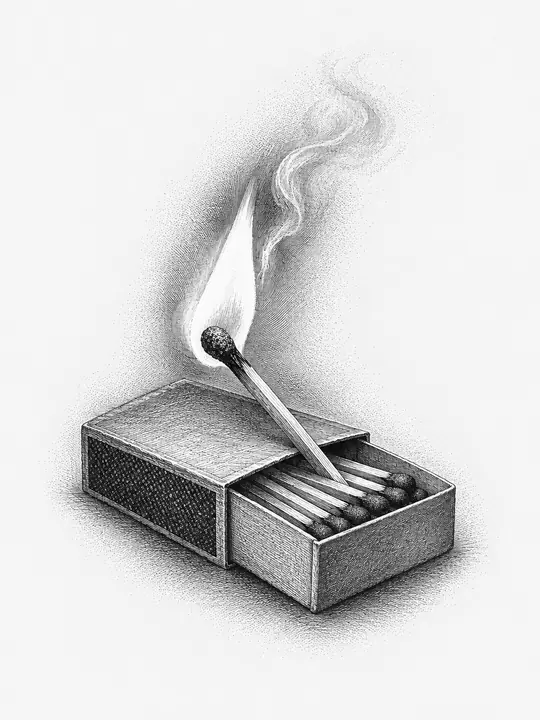
- Struck match
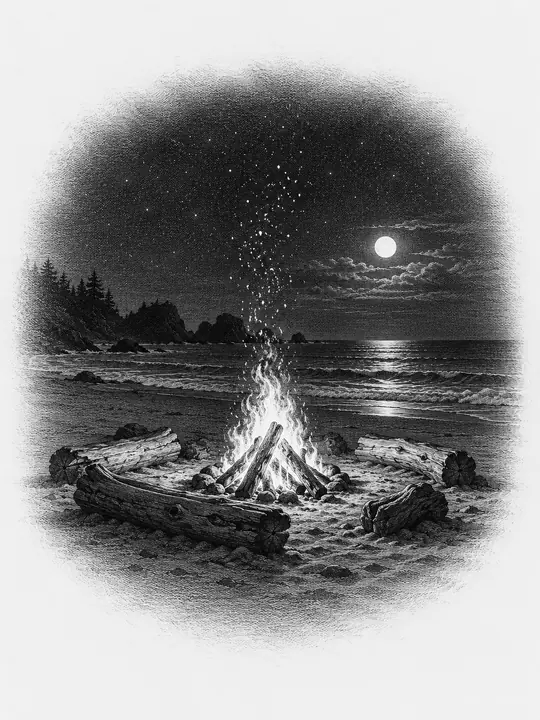
- Campfire
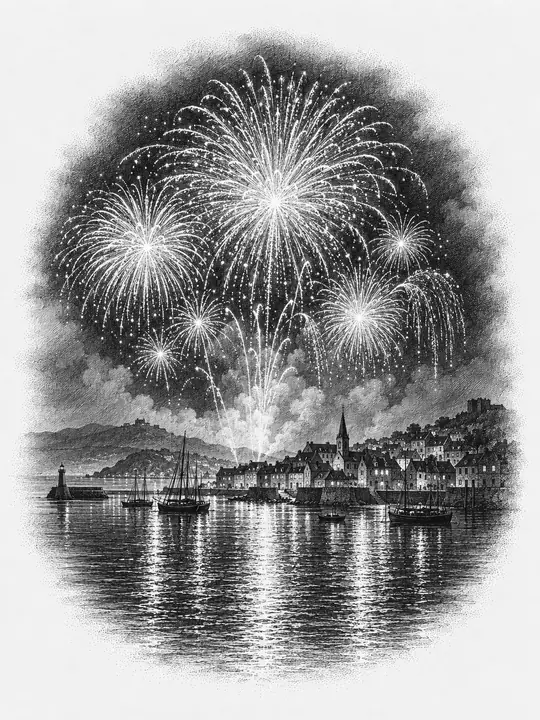
- Fireworks
- Summer lightning
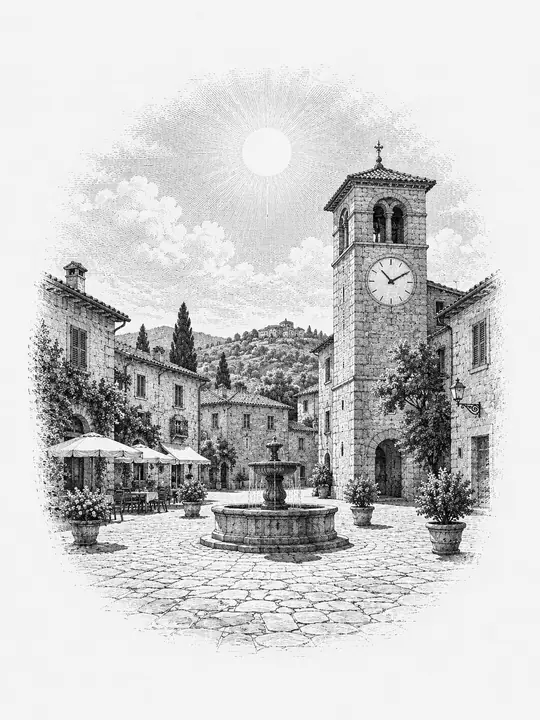
- Noon sun
- Porch light
- Morning sun
- Torch






- Free
- About 12 min
- 131 items
- No sign-up
Answer the statements and get your five personality scores and your light among sixteen, with where closeness, conflict and trust come easily and where they take effort, all tied to your scores.
Which side of four lines your scores fall on decides which of the sixteen lights is yours.
What you will discover
What this report
tells you
A report in 6 chapters. Every interpretation shows the scores it rests on.
- 01
Your type code and what it summarises
Your four letters and your light, including any letter close enough to its line to flip
- 02
The five domains
Where each of the five factors sits in the comparison group, facets included
- 03
Closeness, conflict, novelty and trust
What your scores mean in four scenes every relationship meets
- 04
What comes easily and what takes effort, by kind of partner
What is easy and what takes work with partners unlike you
- 05
The love triangle of your current relationship
Intimacy, passion and commitment in your relationship now, if you are in one
- 06
Method and limits
What it was measured with, and how far to trust it
In your report
- A four-letter type code with a name
- Percentiles on the five domains
- Closeness, conflict, novelty and trust
- Love triangle, if you are in a relationship
How it works
What to expect
You can stop at any point and pick up where you left off.
Personality items, part 1 of 4
29 items, one per screen. Choose one of 5 answers for each.
Personality items, part 2 of 4
29 items, one per screen. Choose one of 5 answers for each.
Personality items, part 3 of 4
29 items, one per screen. Choose one of 5 answers for each.
Personality items, part 4 of 4
29 items, one per screen. Choose one of 5 answers for each.
Your current relationship
15 items, one per screen. Choose one of 5 answers for each. Only if it applies to you.
Get your report
Your report is built as soon as you finish, and is saved on this device only.
Sources
Based on
Where the items and scoring come from, with the licence and translation notes for each.
IPIP-NEO-120
Johnson, J. A. (2014). Measuring thirty facets of the Five Factor Model with a 120-item public domain inventory: Development of the IPIP-NEO-120. Journal of Research in Personality, 51, 78-89. https://doi.org/10.1016/j.jrp.2014.05.003. Items and scoring key: International Personality Item Pool (ipip.ori.org).
- Licence
- Public domain. IPIP home page (https://ipip.ori.org/): "The items and scales are in the public domain, which means that one can copy, edit, translate, or use them for any purpose without asking permission and without paying a fee." IPIP permission page (https://ipip.ori.org/newPermission.htm): "Because the IPIP has been placed in the public domain, permission has already been automatically granted for any person to use IPIP items, scales, and inventories for any purpose, commercial or non-commercial."
- Translation
- 116 of the 120 items are used. The four items of the Liberalism (O6) facet (items 28, 58, 88 and 118), which ask about voting and beliefs, are not asked. The English items are as published on the IPIP site. The Korean items are an in-house translation by Human.ai of the public-domain English items, drafted with reference to the Korean translation on the IPIP site (IPIP-NEO-300, provided by Jong-bum Kim). The Korean wording has not been separately standardised or validated.
IPIP-NEO-120 comparison data
Johnson, J. A. IPIP-NEO data repository, component "Data from Johnson, J. A. (2014)", file IPIP120.dat (N = 619,150). Open Science Framework.
- Licence
- Public research dataset posted by the author. Only summary statistics computed from it by Human.ai (means and standard deviations) are used; no data from the file are reproduced.
- Translation
- This is not a Korean norm. The data come from people who answered in English online; the means and standard deviations were computed from the file by Human.ai.
16-type code (Big Five-based)
McCrae, R. R., & Costa, P. T. (1989). Reinterpreting the Myers-Briggs Type Indicator from the perspective of the five-factor model of personality. Journal of Personality, 57(1), 17-40.
- Licence
- Research basis only. The rule that turns Big Five scores into a four-letter code is Human.ai's own; no items, scales, scoring keys or text from this article or from the instrument it studies are used.
- Translation
- The rule for the code and the sixteen names and descriptions are Human.ai's own. The article is cited only as the basis for relating the four letter axes to four of the Big Five domains.
TLS-15
Kowal, M., Sorokowski, P., Dinić, B. M., Pisanski, K., Gjoneska, B., Frederick, D. A., Pfuhl, G., Milfont, T. L., Bode, A., Aguilar, L., García, F. E., Roberts, S. C., Abad-Villaverde, B., Kavčič, T., Miroshnik, K. G., Ndukaihe, I. L. G., Šafárová, K., Valentova, J. V., Aavik, T., . . . Sternberg, R. J. (2024). Validation of the Short Version (TLS-15) of the Triangular Love Scale (TLS-45) across 37 Languages. Archives of Sexual Behavior, 53(2), 839-857. https://doi.org/10.1007/s10508-023-02702-7
- Licence
- Creative Commons Attribution 4.0 International (https://creativecommons.org/licenses/by/4.0/). The article states: "This article is licensed under a Creative Commons Attribution 4.0 International License, which permits use, sharing, adaptation, distribution and reproduction in any medium or format, as long as you give appropriate credit to the original author(s) and the source, provide a link to the Creative Commons licence, and indicate if changes were made." TLS-15 items from Kowal et al. (2024), Table 2. Changes made: the 15 English items and the two response anchors are used as printed; the Korean items and the Korean labels of the two anchors are a translation of that English text made by Human.ai, which is an adaptation and is not the Korean version the authors validated; the three response steps between the two published anchors show their number only; the instruction shown with the items is written by Human.ai in both languages and is not the authors' instruction. The translation has not been separately validated, and the authors have not reviewed or endorsed it.
- Translation
- The Korean items and response labels are an in-house translation by Human.ai of the English items and response anchors printed in Table 2 of the article (CC BY 4.0). They are not the Korean version the authors validated, and the translation has not been separately validated. "My partner" is rendered as "파트너"; the English items are as printed in the article. The instruction shown before the items is Human.ai's own wording in both languages. The Korean norms in the article were collected with the authors' Korean version, so comparing answers given to this translation with those norms is approximate.
Good to know
Human.ai is for adults aged 19 and over. The first time you start, we ask for your date of birth once. The date is not stored.
Your answers are scored on this device to make the report. Afterwards you can add an AI interpretation if you want one. Your scores are sent to Anthropic, PBC, in the United States only if you ask for it and agree. Your answers to individual questions are never sent. AI interpretations are written by generative AI. They are not written by a person or individually reviewed by a professional.
Read more in the privacy policy
- This report is for self-insight. Do not use it as the basis for hiring, admissions, legal or other important decisions.
- It describes tendencies of personality and makes no judgement about anyone's health.
- Scores are compared with Johnson's public online sample (N = 619,150), which is not a Korean norm. The Korean wording is our own translation and has not been separately validated.
- The report gives no compatibility score, and no pairing of type codes has been validated as compatible or incompatible.
- This is not the Myers-Briggs Type Indicator® (MBTI®) assessment and is not affiliated with or endorsed by The Myers-Briggs Company or Myers & Briggs Foundation. The type code is derived by our own rule from Big Five scores measured with public-domain IPIP items and may differ from an official MBTI® result. MBTI, Myers-Briggs and Myers-Briggs Type Indicator are trademarks or registered trademarks of Myers & Briggs Foundation, Inc.
Curious where you land?
Start now
Free · About 12 min · 131 items · No sign-up